
ADAS News & Articles
Keep up with the latest news and development in the ADAS space, and check back regularly as we continue to publish expert pieces on all things ADAS!
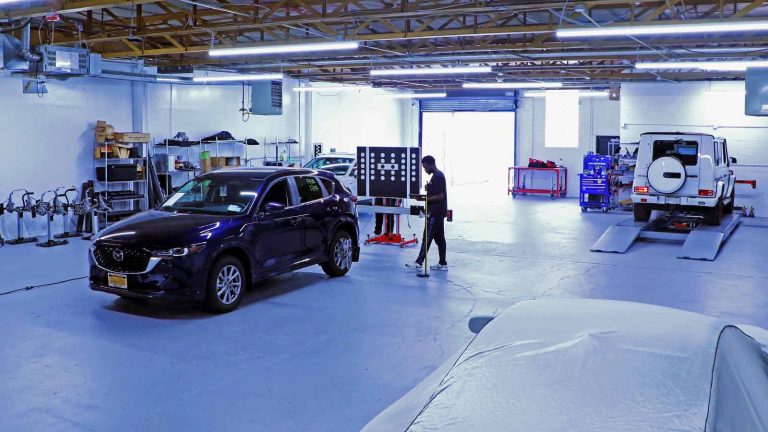
The Evolution of ADAS: From Luxury to Standard
In the ever-evolving world of automotive technology, Advanced Driver Assistance Systems (ADAS) have emerged as a game-changer. At Collision Automotive…

Understanding the Different Types of ADAS Calibration
As Advanced Driver Assistance Systems (ADAS) become increasingly common in modern vehicles, understanding the calibration process for these systems is…
Industry Insights
Take a look at the case studies, research and valuable data that will help you make better decisions for your business and your customers.

Glossary of Terms
ABS (Anti-lock Braking System): A safety system that prevents the wheels from locking up during braking, ensuring the driver maintains steering control.
Adaptive Cruise Control (ACC): A system that automatically adjusts the vehicle's speed to maintain a safe distance from the vehicle ahead.
ADAS (Advanced Driver Assistance Systems): A suite of systems that use sensors and software to assist drivers in driving and parking functions, improving safety and driving performance.
Back-up Camera: A camera mounted at the rear of the vehicle that provides a live feed of the area behind the car to assist in parking and reversing.
Blind Spot Detection: A system that monitors the vehicle's blind spots and alerts the driver to the presence of other vehicles.
Collision Avoidance System: A system that uses sensors to detect potential collisions and takes action, such as applying the brakes, to prevent or mitigate the impact.
Coated Walls: Walls treated with non-reflective materials to prevent light reflections that can interfere with sensor calibration.
Dynamic Calibration: The process of calibrating ADAS sensors while the vehicle is in motion, allowing for real-world adjustments and accuracy.
Electronic Stability Control (ESC): A system that improves a vehicle's stability by detecting and reducing loss of traction (skidding).
Emergency Steering: A system that autonomously steers the vehicle to avoid a collision.
FCW (Forward Collision Warning): A system that alerts the driver to a potential collision with a vehicle or object ahead.
Global Positioning System (GPS): A satellite-based system that provides location and time information, used in ADAS for navigation and positioning.
Lane Departure Warning (LDW): A system that alerts the driver when the vehicle begins to drift out of its lane without signaling.
Lane Keeping Assist (LKA): A system that actively steers the vehicle to keep it within its lane.
LiDAR (Light Detection and Ranging): A remote sensing method that uses light in the form of a pulsed laser to measure distances to the surrounding objects.
OEM (Original Equipment Manufacturer) Approved Software: Software that is certified by the vehicle's manufacturer for use in ADAS calibration, ensuring compatibility and accuracy.
Parking Assistance: A system that aids drivers in parking by alerting them to obstacles and, in some cases, controlling the steering to maneuver the vehicle into a parking space.
Passive ADAS: Systems that provide alerts and warnings to the driver but do not take direct action to prevent accidents.
RADAR (Radio Detection and Ranging): A system that uses radio waves to detect objects and measure their distance and speed, commonly used in ADAS for collision avoidance and adaptive cruise control.
Self Parking: A feature that allows the vehicle to autonomously park itself without driver input.
Sonar (Sound Navigation and Ranging): A system that uses sound waves to detect objects and measure distances, often used in parking sensors.
Static Calibration: The process of calibrating ADAS sensors in a controlled environment using specific targets and tools.
TCS (Traction Control System): A system that prevents wheel slip during acceleration by reducing engine power or applying brakes to specific wheels.
Traffic Jam Assist: A system that combines adaptive cruise control and lane keeping assist to help the driver during heavy traffic conditions.
Ultrasonic Sensors: Sensors that use ultrasonic waves to detect objects around the vehicle, commonly used for parking assistance and obstacle detection.