
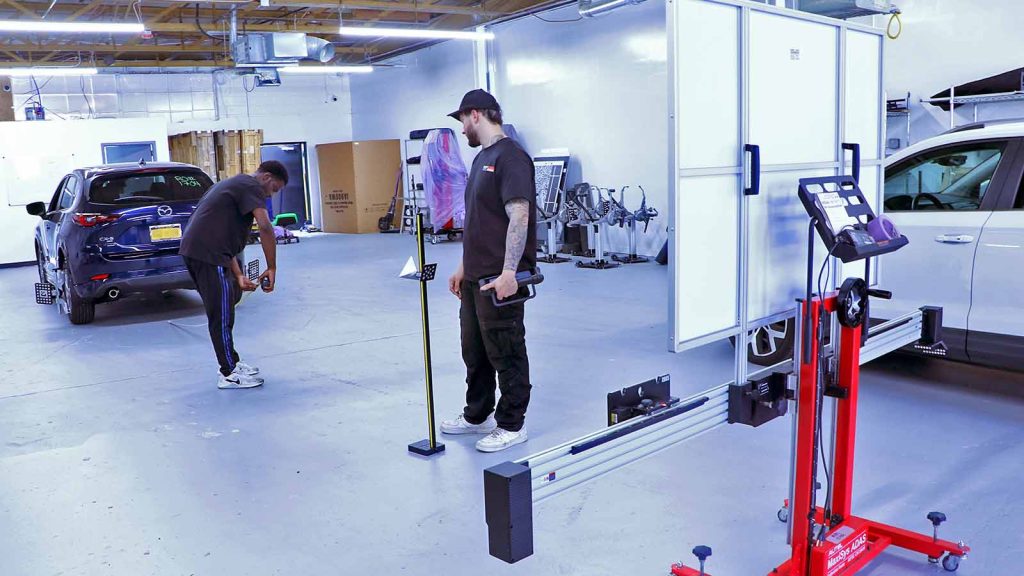
As Advanced Driver Assistance Systems (ADAS) become increasingly common in modern vehicles, understanding the calibration process for these systems is crucial. At Collision Automotive Diagnostics, we specialize in ADAS calibration, ensuring your vehicle’s safety features are functioning correctly. In this article, we’ll dive into the two main types of ADAS calibration: static and dynamic.
What is ADAS Calibration?
Before we delve into the types of calibration, let’s briefly explain what ADAS calibration is and why it’s important.
ADAS calibration is the process of ensuring that all the sensors, cameras, and radars that make up a vehicle’s ADAS are aligned correctly and functioning as intended. This is crucial because even a slight misalignment can cause these systems to malfunction, potentially compromising your safety on the road.
Static Calibration: Precision in a Controlled Environment
What is Static Calibration?
Static calibration, as the name suggests, is performed while the vehicle is stationary in a controlled environment. This type of calibration requires specific tools and targets placed at precise distances and angles from the vehicle.
When is Static Calibration Necessary?
Static calibration is typically required in the following scenarios:
- After windshield replacement
- Following front-end collision repairs
- When replacing ADAS components like cameras or sensors
- If you're experiencing consistent ADAS malfunctions
The Static Calibration Process
At Collision Automotive Diagnostics, our static calibration process involves:
- Placing the vehicle on a level surface in our state-of-the-art facility
- Using laser measurement tools to ensure perfect alignment
- Setting up manufacturer-specific calibration targets at precise distances
- Connecting the vehicle to our OEM-approved diagnostic tools
- Running the calibration software to reset and align the ADAS components
Our facility is specially designed for static calibration, with features like:
- Perfectly leveled floors
- Controlled lighting conditions
- Non-reflective wall coatings to prevent interference
Dynamic Calibration: Real-World Adjustments
What is Dynamic Calibration?
Dynamic calibration is performed while the vehicle is being driven on the road. This type of calibration allows the ADAS to adjust and calibrate itself in real-world conditions.
When is Dynamic Calibration Necessary?
Dynamic calibration is often required for systems like:
- Lane Keep Assist
- Adaptive Cruise Control
- Some types of camera-based systems
It’s also sometimes necessary as a follow-up to static calibration.
The Dynamic Calibration Process
Our dynamic calibration process typically involves:
- Connecting a diagnostic tool to the vehicle
- Driving the vehicle on a specific type of road (often a straight, well-marked road)
- Maintaining a certain speed for a set distance
- Allowing the vehicle’s systems to self-calibrate based on road markings and surroundings
During this process, our trained technician ensures all safety protocols are followed.
- Perfectly leveled floors
- Controlled lighting conditions
- Non-reflective wall coatings to prevent interference
Which Type of Calibration Does Your Vehicle Need?
The type of calibration your vehicle needs depends on several factors:
- The specific ADAS features in your vehicle
- The make and model of your car
- The reason for calibration (e.g., after a repair, due to a malfunction)
At Collision Automotive Diagnostics, we have the expertise to determine the right calibration method for your vehicle. We follow manufacturer guidelines to ensure your ADAS is calibrated correctly, whether that requires static calibration, dynamic calibration, or both.
The Importance of Professional Calibration
While some may be tempted to skip professional calibration to save time or money, this can be a costly mistake. Improperly calibrated ADAS can lead to:
- False alerts or failure to alert when necessary
- Incorrect interventions (like unnecessary braking)
- Failure to intervene in critical situations
These issues not only affect your driving experience but can also compromise your safety and the safety of others on the road.
Conclusion
Understanding the different types of ADAS calibration is crucial for every modern vehicle owner. Whether your car needs static calibration, dynamic calibration, or both, the key is to have it done by professionals with the right tools and expertise.
At Collision Automotive Diagnostics, we’re committed to ensuring your vehicle’s ADAS is functioning correctly. Our state-of-the-art facility and experienced technicians are equipped to handle all types of ADAS calibration for all makes and models.
Don’t take chances with your safety. If you’ve recently had your windshield replaced, been in a collision, or are experiencing issues with your ADAS, contact us today to schedule a calibration. Let’s work together to keep you safe on the road.