What is ADAS in Cars?
Advanced Driver Assistance Systems (ADAS) represent a significant leap forward in vehicle safety, aiming to mitigate human error while driving. These systems leverage cutting-edge technologies to aid drivers in various driving conditions, enhancing overall performance and safety.
By utilizing a sophisticated blend of sensor technologies, ADAS can interpret the surroundings of a vehicle, offering crucial information to the driver or autonomously intervening when necessary.
ADAS functions by alerting drivers to potential hazards or actively preventing accidents. Vehicles equipped with ADAS are capable of sensing their environment, processing this data swiftly and accurately via advanced computing systems, and delivering appropriate responses to the driver.
These vehicles are outfitted with an array of sophisticated sensors that supplement the human driver’s sensory and decision-making capabilities. While humans struggle to see in the dark, RADAR ADAS technology excels in low-visibility conditions.
Unlike humans, who cannot echolocate objects accurately, SONAR ADAS technology can detect obstacles, such as a pedestrian behind the vehicle, before reversing. Humans are also unable to see in all directions simultaneously, but ADAS cameras and LiDAR sensors provide a comprehensive 360-degree view.
While humans may not constantly know their precise location, global positioning satellites relay accurate latitude and longitude information to the vehicle. The ADAS package includes a suite of sensors, interfaces, and a powerful computer processor that integrates all collected data and makes real-time decisions.
These sensors are perpetually monitoring the vehicle’s surroundings, feeding information to onboard ADAS computers for immediate prioritization and action. Currently, ADAS technologies are instrumental in preventing accidents and saving lives.
Types of ADAS in Vehicles
We can distinguish between Passive and Active ADAS technologies.
PASSIVE ADAS SYSTEMS
In a Passive ADAS system, regardless of the types or number of sensors installed, the computer’s role is limited to alerting the driver of unsafe conditions. It is then up to the driver to take corrective action to prevent potential accidents.
Typical warning methods include auditory alerts, flashing lights, and sometimes physical feedback, such as a vibrating steering wheel to signal an occupied lane during a lane change.
Anti-lock Braking Systems (ABS):
Electronic Stability Control (ESC):
Traction Control System (TCS):
Integrates features of both ABS and ESC to help maintain traction while navigating turns and curves.
Back-up Camera:
Lane Departure Warning (LDW):
Alerts drivers if the vehicle begins to drift out of its lane.
Forward Collision Warning (FCW):
Advises the driver to brake to avoid a potential collision ahead.
Blind Spot Detection:
Parking Assistance:
Alerts the driver when the vehicle’s front or rear bumpers are nearing an object at low speeds, such as during parking.
ACTIVE ADAS SYSTEMS
Automatic Emergency Braking:
Applies brakes automatically to avoid collisions with vehicles, pedestrians, animals, or other obstacles in the vehicle’s path.
Emergency Steering:
Steers the vehicle to avoid obstacles in its lane.
Adaptive Cruise Control:
Adjusts the cruise control speed to match the speed of vehicles ahead.
Lane Keeping Assist and Lane Centering:
Steers the vehicle to maintain a central position within the lane.
Traffic Jam Assist:
Combines adaptive cruise control and lane keeping assist to provide semi-automated assistance during heavy traffic conditions, such as stop-and-go traffic.
Self Parking:
Automates the parking process, maneuvering the vehicle into parking spaces without driver input.
Both passive and active ADAS technologies play a critical role in enhancing vehicle safety, reducing accidents, and paving the way toward fully autonomous driving.
Why is ADAS Calibration Important?
Now that you understand the basics of ADAS technology in vehicles and how it functions, you can understand why proper ADAS calibration and repair is a crucial element of safe and responsible driving.
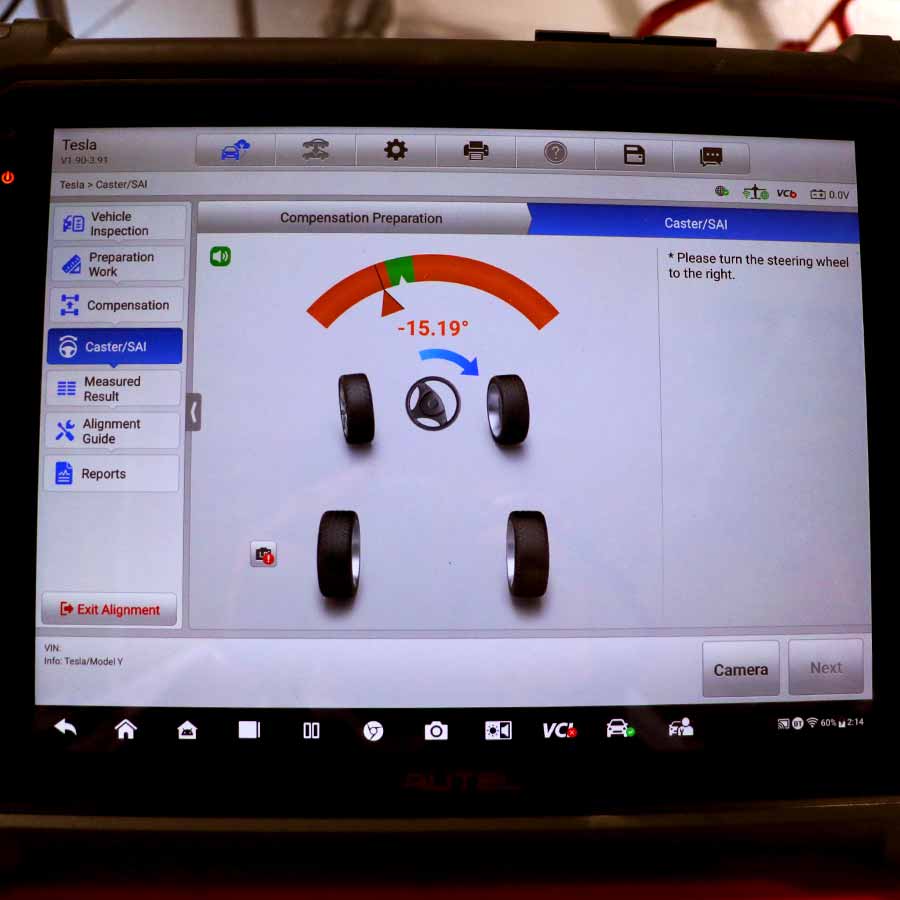
ADAS calibration is essential for maintaining the accuracy and reliability of these systems There are two primary types of ADAS calibration: static and dynamic.
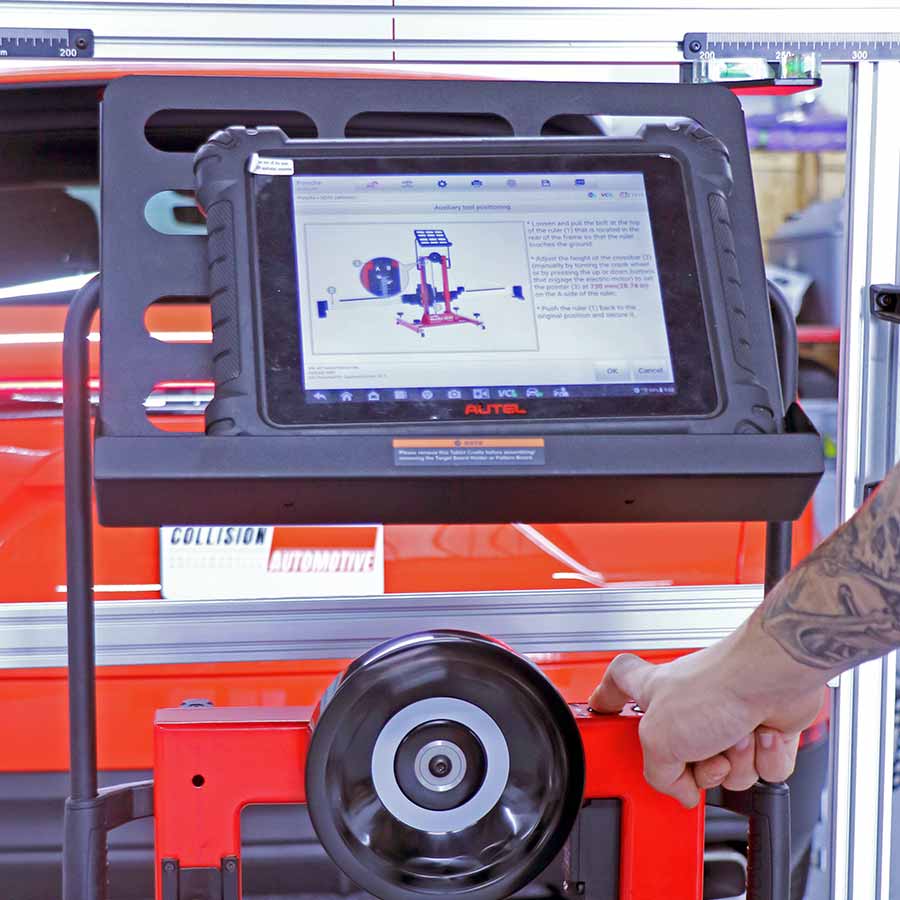
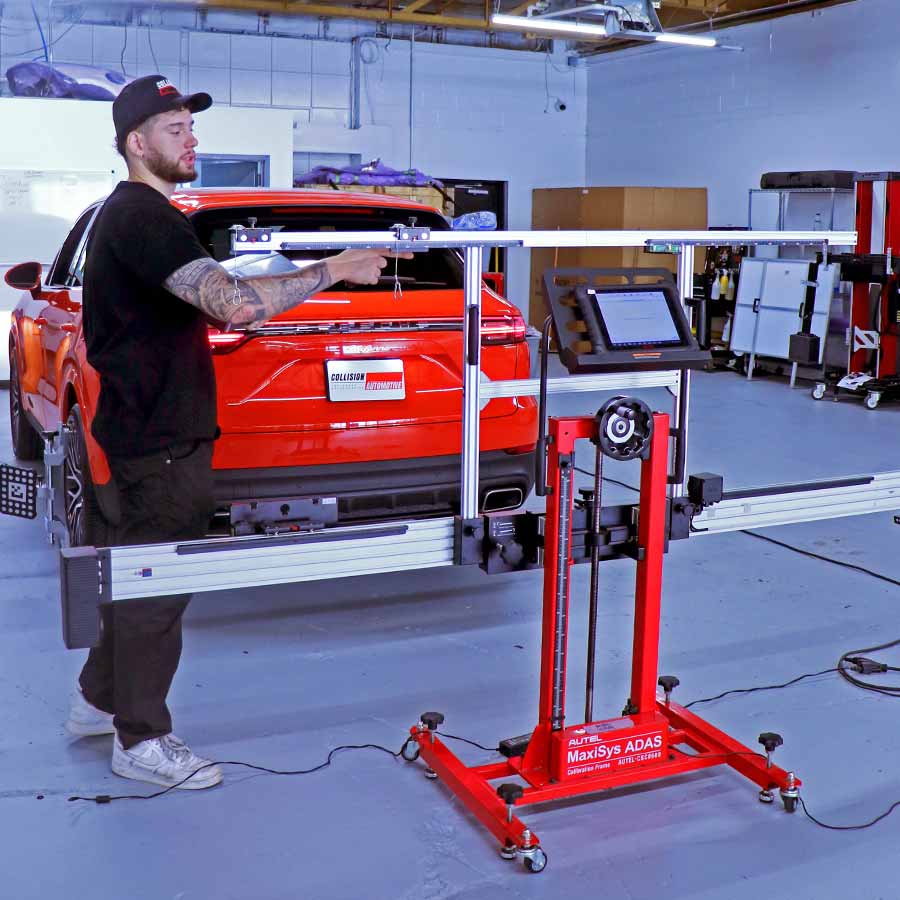
Static Calibration: This type is conducted in a controlled environment using specific targets and tools to precisely align the sensors. This method ensures that all sensors are correctly positioned without external influences.
Dynamic Calibration: This calibration occurs while the vehicle is in motion, allowing sensors to adjust and recalibrate in real-world driving conditions. This method ensures that the sensors function accurately in the diverse environments a driver will encounter on the road.
Benefits of ADAS Calibration
Proper calibration of ADAS systems offers numerous benefits, including:
Improved Lane-Keeping Accuracy: Ensures that lane-keeping systems operate precisely, reducing the risk of unintentional lane departures.
Enhanced Adaptive Cruise Control: Fine-tunes the system for better performance, maintaining safe distances from other vehicles.
Reliable Automatic Emergency Braking: Ensures the system responds accurately to potential collisions, improving overall vehicle safety.
Calibrated ADAS systems significantly enhance vehicle safety and driver assistance, ensuring a safer driving experience for all passengers, as well as pedestrians and other vehicles.
What Happens if You Neglect ADAS Calibration?
Failing to properly calibrate ADAS systems can lead to serious consequences:
Increased Accident Risk: Misaligned or improperly calibrated systems may not detect hazards accurately, increasing the likelihood of accidents.
Impact on Warranty and Insurance: Manufacturers may require proper calibration for warranty claims, and improper calibration can affect insurance coverage.
The Types of ADAS Equipment We Use
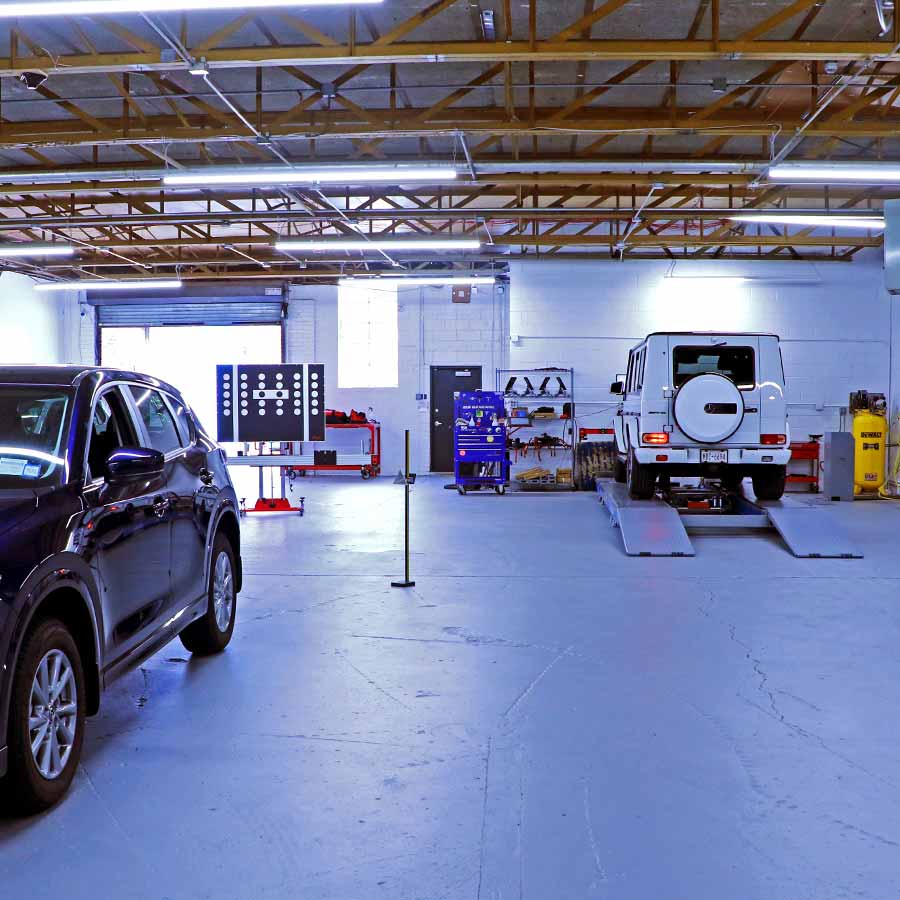
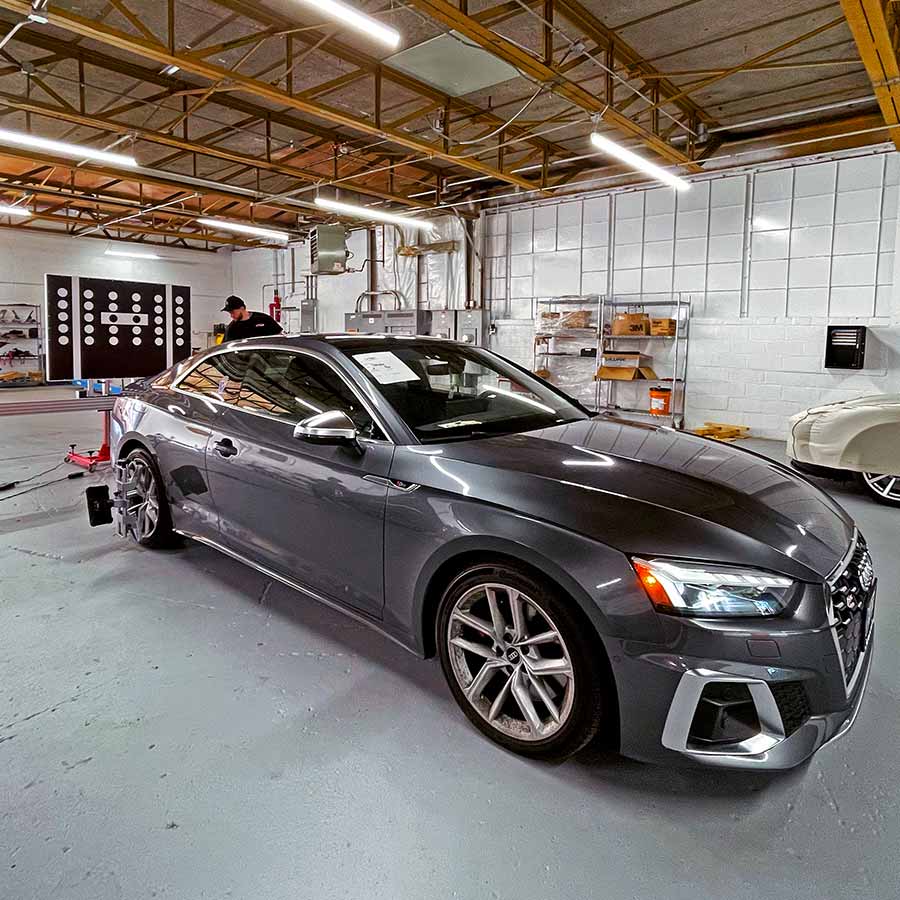
At Collision Automotive Diagnostics, we provide the perfect ADAS calibration and testing environment for all makes and models.
Perfectly leveled floors. Our floors are laser-leveled, ensuring that the vehicle is on a stable and even surface. This prevents any tilt or skew that could affect sensor alignment.
Optimized lighting conditions. No natural light and only optimized, consistent artificial lighting ensures the most accurate calibration possible. It eliminates shadows and glare that could interfere with sensor readings.
Coated walls. Walls coated with non-reflective materials help to avoid any light reflections or sensor disruptions, ensuring accurate calibration results.
OEM approved software. We use software approved by the Original Equipment Manufacturer (OEM), guaranteeing that the calibration process adheres to the specific standards and requirements of the vehicle’s make and model.